
Meet the teacher inspiring the next generation of informed decision-makers
For Chris Lacy, teaching has never just been a job. It’s been her calling.
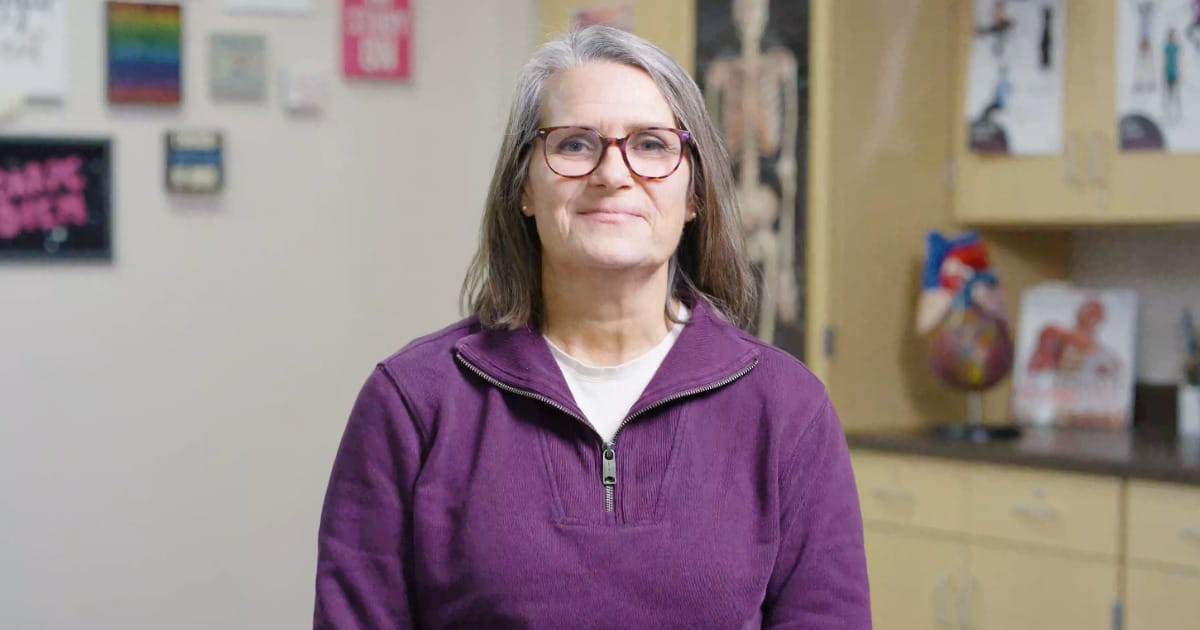
“I knew from the age of five that I wanted to be a teacher,” she says with a smile.
Now in her 32nd year at Chanhassen High School, Chris teaches Personal Wellness — a blend of health and physical education — where she helps students understand not just how their bodies work, but how to care for them for a lifetime. Her goal for every student is simple and heartfelt:
“I always tell my students I want them to live to be 100.”
But getting there requires more than memorizing facts. It requires curiosity, critical thinking and the courage to ask questions — especially about complex topics like organ donation.
Creating space for questions
Chris has watched education evolve over three decades. Today’s students, she says, are independent and inquisitive. They don’t just accept information — they want to know why.
“When I introduce something new, they always ask why. And I love that.”
That curiosity is especially important when students approach milestones like getting their driver’s permit. As ninth graders begin thinking about checking the organ donor box on their license, questions naturally follow.
“They hear about checking the box, but they don’t fully understand what it means,” Chris explains. “Some of what they know comes from social media — and some of it isn’t correct.”
Instead of shutting down those conversations, Chris leans into them. She invites discussion, asks other students to share what they know and guides the class toward research-based, accurate information.
For her, education isn’t about telling students what to decide. It’s about giving them the tools to decide thoughtfully.
“If they’re going to check that box, they need to have all their questions answered. It’s a commitment.”
A personal connection
Chris’ passion for organ donation isn’t only professional; it’s personal.
She remembers attending the service of her aunt, who passed away from lymphoma at a young age. In the midst of grief, she noticed something unexpected: a sign indicating her aunt had donated eye tissue.
“I was baffled,” Chris recalls. “I thought, she has cancer. How can she donate?”
That moment became a lesson. Many common health conditions do not automatically disqualify someone from donation. Even in loss, her aunt was able to help others.
“Knowing her, I know that would have been at the top of her list — to leave that legacy.”
That experience reinforced Chris’ belief that organ donation is rooted in empathy — a value she works hard to cultivate in her classroom.
“One of my biggest values as a teacher is empathy, putting yourself in someone else’s shoes. Organ donation fits seamlessly with that.”
Addressing Fears and Misconceptions
In her classroom, no question is off-limits — including one of the most common concerns students raise:
“Will doctors still work as hard to save me if I’m a registered donor?”
Chris answers clearly and confidently:
“The number one priority for the healthcare team is saving your life. They won’t know if you’re registered, and they will do everything they can for you.”
She explains that organ donation is handled by a separate organization only after a person has been declared dead. Separating myth from fact helps students move beyond fear and toward understanding.
She also shares another perspective many teens haven’t considered:
“It’s more likely that you would need a transplant than become a donor.”
That realization often shifts the conversation. Organ donation isn’t just something that happens to “other people.” It’s a community issue, one that could affect any family.
When students ask if they’re too young or healthy enough to register, Chris provides practical guidance:
- You can register at age 15 when applying for your permit.
- If you’re under 18, talk to your family or legal guardian so they understand your wishes.
- Most common health conditions do not automatically disqualify you.
And then she shares a powerful reminder:
“Fun fact — one donor can save and heal more than 75 lives.”
You can almost see the moment it clicks.
The power of partnership
For more than 20 years, Chanhassen High School has partnered with LifeSource to bring real stories into the classroom. Guest speakers — donor families, recipients and professionals — help students connect facts to faces.
“We love partnering with LifeSource because they bring the human quality into organ donation,” Chris says. “They’re passionate. They volunteer their time. Students see that this really matters.”
In her Health Career Exploration classes, Chris also introduces students to career paths they may never have considered — including roles within organ donation and procurement. It broadens their understanding of healthcare beyond doctors and nurses, opening doors to meaningful futures.
A teacher, a mom, a registered donor
Chris herself checked the donor box at 16 — a decision she discussed openly with her three children as they grew up.
“Those conversations came up during the driver’s license era,” she laughs. “What does it mean? What if I’m under 18? Who decides?”
Today, all three of her children support organ donation. For Chris, that’s proof that informed conversations at home — just like in the classroom — make a difference.
“I think as parents, it’s our role to help them see what their future could be.”
Empowering the next generation
At its core, Chris Lacy’s work is about empowerment. She doesn’t pressure students to choose one way or another. She gives them accurate information. She encourages dialogue with trusted adults. She creates a safe space for tough questions.
And then she trusts them.
Because that’s what great teachers do.
“I want them to have the skills,” she says. “Then they can decide.”
In a world filled with noise and misinformation, Chris Lacy is doing something powerful: teaching young people not just what to think — but how to think.
And in the process, she’s helping build a generation that approaches organ donation with knowledge, empathy and confidence.