

What is the Difference Between a Coma and Brain Death?
Answer: A lot.
UPDATE: If you have family or loved ones currently in the hospital and you are discussing the potential to donate and save lives, click here.
Tus Mob Tsis Xeev
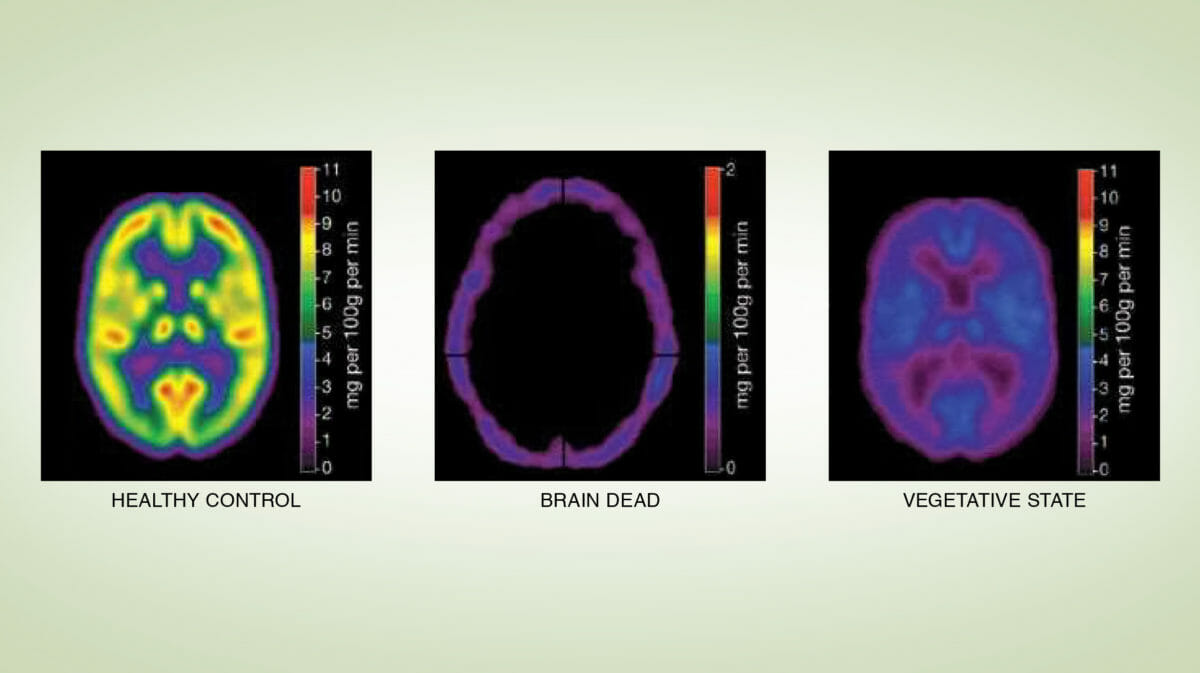
Coma is a state of unarousable unresponsiveness.1 A coma is a deep state of eyes-closed unconsciousness where a person is not able to respond to people or the environment around them. In a coma, a patient is alive and there is some brain activity. Depending on the severity of the injury, recovery time varies and comas can be temporary or permanent.
Cov neeg mob uas muaj tus mob tsis xeev los yuav muaj cov kev hnov xeev ntawm cov ceg hlwb, kev ua pa uas tshwm sim ntawm nws tus kheej thiab/los sis cov kev hnov xeev ntawm lub cev txav mus los yam tsis muaj lub hom phiaj. Tus mob tsis xeev yuav muaj cov txiaj ntsig tshwm sim uas tuaj yeem muaj tau peb yam: qhov yuav ua rau kom muaj kev tuag ntawm lub hlwb tau, kev rov zoo los ntawm kev ras xeev, los sis txoj kev hloov mus rau qhov txheej xwm ntawm kev ras xeev uas ua rau muaj kev ntxhov siab kho zoo tsis tu qab, xws li qhov txheej xwm uas tus neeg tsis meej pem lawm.
Cov neeg mob uas muaj tus mob tsis xeev yuav tsis xam tias xav tau kev muab tej khoom nruab nrog, qhov muag, los sis tsig nqaij pub dawb rau nws.
Lub Hlwb Tuag
According to the American Academy of Neurology, “Death by neurologic criteria, commonly referred to as brain death, occurs in individuals who have sustained catastrophic brain injury, with no evidence of function of the brain as a whole, a state that must be permanent.”2 Brain death is legally and medically recognized as death. Brain death results from swelling in the brain; blood flow in the brain ceases and without blood to oxygenate the cells, the tissue dies.
The brain performs many functions, including thought, movement and all the neurological functions that allow the body to maintain blood pressure, heart rate, body temperature, hormones, breathing, etc. When a person deteriorates to brain death, the body’s entire system stops. You cannot breathe, your heart cannot beat and your body cannot function once your brain dies. Massive artificial medical measures must be started to maintain organ function (such as ventilated support), but these interventions are only a temporary measure.
Kev Kuaj Txog Lub Hlwb Tuag
Organ Procurement Organizations (like LifeSource) do not make determinations of brain death. Instead, hospital clinicians who are separate from the donation and transplant process are responsible for determining and declaring death.
Physicians and health care providers conduct a comprehensive assessment to determine brain death, performing several tests to confirm there is no brain activity in accordance with strict medical standards.2
Only after brain death has been confirmed and the time of death noted, can organ donation become a possibility.
Kev Muab Tej Khoom Nruab Nrog Pub Dawb Tom Qab Lub Hlwb Tuag
Raws li tsoom fwv txoj cai tswj hwm, cov tsev neeg ntawm tus neeg mob uas muaj lub hlwb tuag yuav tsum tau txais qhov kev xaiv txog kev muab tej khoom nruab nrog pub dawb. Yog tias tsev neeg tsis kam muab tej khoom pub dawb, yuav tsis siv lub tshuab pab ua pa, cov tshuaj thiab cov dej tshuam ntxiv mus lawm, tom qab lub plawv nres lawm. Yog tias tsev neeg hais tias kam muab tej khoom pub dawb, ces lub koom haum ua txheej txheem kev pub nqaij nruab nrog hauv lub cev uas nyob hauv cheeb tsam yuav muaj feem cuam tshuam nrog (LifeSource hauv MN, ND, SD). Yuav khaws lub cev ntawm tus neeg muab tej khoom pub dawb cia kom ua tau hauj lwm li qub los ntawm cov hauv kev uas yog tib neeg tsim tawm los, xws li kev txhawb nqa pab ua pa kom txog rau thaum kev kho kom zoo rov los ntawm cov khoom nruab nrog thiab cov tsig nqaij rau kev cog tej khoom nruab nrog pab txoj sia.
Yog tias koj txhawb nqa kev muab khoom nruab nrog pub dawb yuav yog ib qho tseem ceeb uas yuav teev tseg txog koj li kev txiav txim siab. Qhov no yuav ua kom tsis txhob muaj kev nyuaj siab rau cov neeg uas koj hlub los ua kev txiav txim siab thaum koj tag sim neej lawm.
Citations:
- Tindall SC. Level of Consciousness. In: Walker HK, Hall WD, Hurst JW, editors. Clinical Methods: The History, Physical, and Laboratory Examinations. 3rd edition. Boston: Butterworths; 1990. Chapter 57. Available from: https://www.ncbi.nlm.nih.gov/books/NBK380/ ↩︎
- American Academy of Neurology. (2023). Pediatric and adult brain death/death by neurologic criteria consensus guideline. https://www.neurology.org/doi/10.1212/WNL.0000000000207740 ↩︎
Photo credit: Nature Reviews Steven LAUREYS MD PhD FEAN.
Rau npe hauv oos lais los ua ib tug neeg muab khoom nruab nrog pub dawb.
Kawm paub ntau ntxiv txog qhov txheej txheem kev muab khoom nruab nrog pub dawb.