

What is the Difference Between a Coma and Brain Death?
Answer: A lot.
UPDATE: If you have family or loved ones currently in the hospital and you are discussing the potential to donate and save lives, click here.
Koomada
Coma is a state of unarousable unresponsiveness.1 A coma is a deep state of eyes-closed unconsciousness where a person is not able to respond to people or the environment around them. In a coma, a patient is alive and there is some brain activity. Depending on the severity of the injury, recovery time varies and comas can be temporary or permanent.
Bukaannada ku jira koomada waxaa laga yaabaa inay yeeshaan jawaabaha asliga maskaxda, neefsasho kedis ah iyo/ama jawaabaha dhaqdhaqaaqa aan ujeeddada lahayn. Koomadu waxay leedahay saddex natiijo oo suurtagal ah: hor-u-socodka illaa dhimashada maskaxda, soo kabashada miyir-qabka, ama u gudbaan xaalad miyir-beeleed oo mudda dheer, sida xaalad daaqsineed.
Bukaannada ku jira koomada looma tixgeliyo tabarucaada xubinta, isha, ama unuga.
Dhimashada Maskaxda
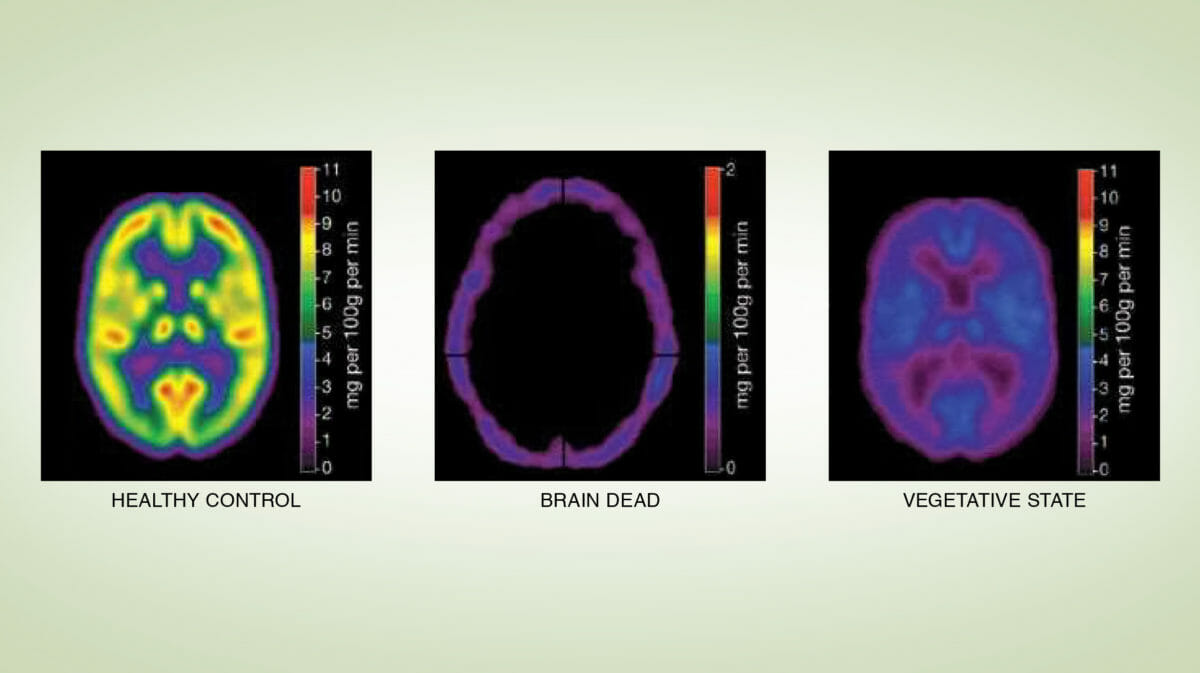
According to the American Academy of Neurology, “Death by neurologic criteria, commonly referred to as brain death, occurs in individuals who have sustained catastrophic brain injury, with no evidence of function of the brain as a whole, a state that must be permanent.”2 Brain death is legally and medically recognized as death. Brain death results from swelling in the brain; blood flow in the brain ceases and without blood to oxygenate the cells, the tissue dies.
The brain performs many functions, including thought, movement and all the neurological functions that allow the body to maintain blood pressure, heart rate, body temperature, hormones, breathing, etc. When a person deteriorates to brain death, the body’s entire system stops. You cannot breathe, your heart cannot beat and your body cannot function once your brain dies. Massive artificial medical measures must be started to maintain organ function (such as ventilated support), but these interventions are only a temporary measure.
Tijaabinta Dhimashada Maskaxda
Organ Procurement Organizations (like LifeSource) do not make determinations of brain death. Instead, hospital clinicians who are separate from the donation and transplant process are responsible for determining and declaring death.
Physicians and health care providers conduct a comprehensive assessment to determine brain death, performing several tests to confirm there is no brain activity in accordance with strict medical standards.2
Only after brain death has been confirmed and the time of death noted, can organ donation become a possibility.
Tabarucaada Dhimashada Maskaxda Kadib
Qoysaska bukaanka maskaxda ka dhintay waa in, sida waafaqsan xeerarka federaalka, la siiyaa ikhtiyaarka tabarucaada xubnaha. Haddii qoysku diido tabarucaada, hawo-siiyaha farsamada, daawooyinka iyo dareeraha waa la joojinayaa, ka dib wadnaha wuu istaagayaa. Haddi qoysku yiraahdo haa tabarucaada, ururka soo iibinta xubnaha gobolka (LifeSource ku sugan MN, ND, SD) ayaa ka qaybqaadan doona. Jirka tabarucaha waxaa lagu xafidaa inuu ku shaqeeyo hab macmal ah, sida taageero hawo leh ilaa laga soo kabsado xubnaha iyo unugyada beerista naf-badbaadinta.
Haddii aad taageerto tabarucaada waa muhiim inaad diiwaangeliso go'aankaaga. Tani waxay meesha ka saaraysaa culayska haysta dadka aad jeceshahay si ay go'aan uga gaaraan marka aad dhimato.
Citations:
- Tindall SC. Level of Consciousness. In: Walker HK, Hall WD, Hurst JW, editors. Clinical Methods: The History, Physical, and Laboratory Examinations. 3rd edition. Boston: Butterworths; 1990. Chapter 57. Available from: https://www.ncbi.nlm.nih.gov/books/NBK380/ ↩︎
- American Academy of Neurology. (2023). Pediatric and adult brain death/death by neurologic criteria consensus guideline. https://www.neurology.org/doi/10.1212/WNL.0000000000207740 ↩︎
Photo credit: Nature Reviews Steven LAUREYS MD PhD FEAN.