

What is an honor walk? Understanding the meaning behind these powerful moments
If you’ve seen a video of hospital staff lining a hallway in silence as a patient is wheeled by, you may have witnessed what’s known as an honor walk.
These moments often go viral — and for many people, they raise questions. Here’s what to know.
For donor families: LifeSource is honored to offer a new Honor Walk Video Tribute Program, giving families the option to preserve these moments through a thoughtfully created video keepsake. If you have a recording of your loved one’s honor walk and would like to preserve it, we would be honored to help. Learn more about the honor walk video tribute project.
Editor’s note: This article was originally published in February 2020 and has been updated to provide additional context and answer common questions about honor walks, especially for those who may encounter them online.
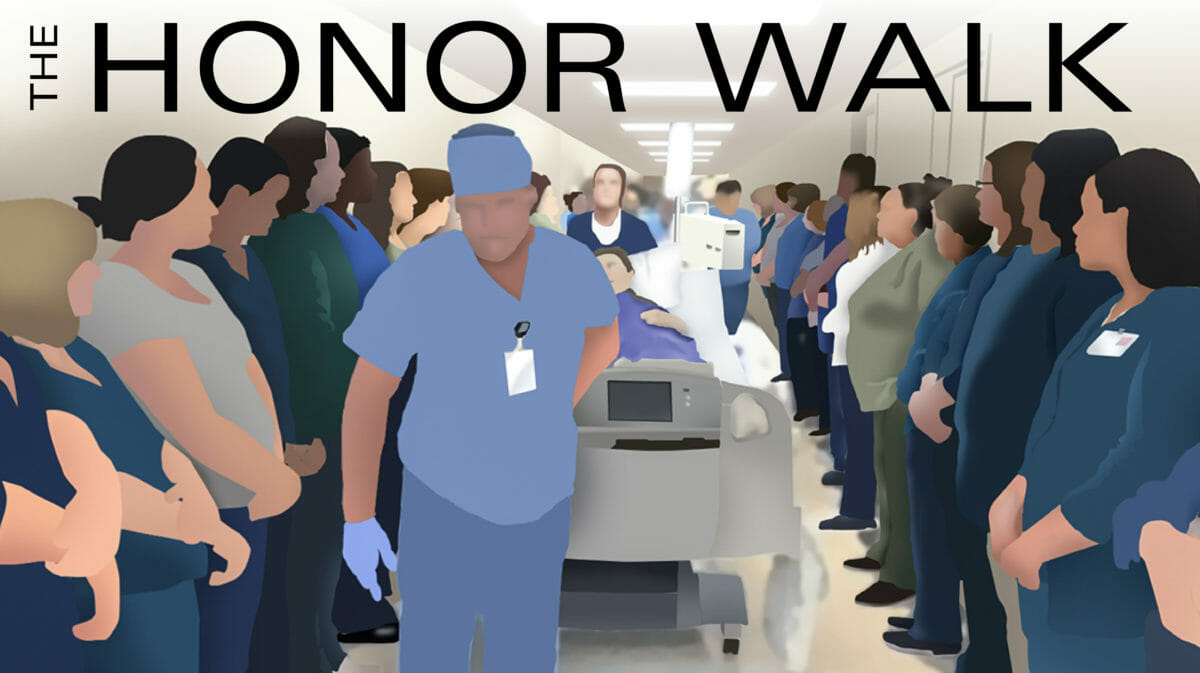
What is an honor walk?
An honor walk is a quiet, respectful moment that may take place in a hospital when a patient is an organ donor.
Doctors, nurses and hospital staff — along with the organ donor’s family and friends — line the hallway as the patient is transported from the Intensive Care Unit (ICU) to the Operating Room (OR) for organ donation surgery. It’s a way to honor the generous organ donor and recognize their decision to give the gift of life.
What happens during an honor walk?
Every honor walk is a little different, but most share a few common elements:
- Hospital staff line the hallway in silence
- The donor is gently transported from their room to the operating room
- Loved ones may walk alongside or just behind
- Some families choose to play music or include personal touches
The atmosphere is often quiet and emotional — a moment of reflection, gratitude and respect.
Why do hospitals hold honor walks?
Honor walks serve several important purposes:
- To honor the donor: Organ donation is a final act of generosity. The honor walk recognizes that gift in a visible, meaningful way.
- To support the family: For many families, this moment shows they are not alone. It’s a way for the care team to stand beside them in their grief.
- To allow caregivers to say goodbye: Doctors, nurses and staff who cared for the patient often form deep connections. The honor walk gives them a chance to pause and pay their respects.
Why do honor walk videos go viral?
Honor walk videos often resonate deeply because they capture something real and rarely seen:
- A powerful moment of compassion
- A visible expression of gratitude
- The impact of organ donation in a human way
For some viewers, these videos are incredibly moving. For others, they can feel deeply personal or even difficult to watch. Both reactions are valid.
Are families okay with this?
Yes — honor walks only happen with the family’s permission. Every aspect is optional. Families can decide:
- Whether to have an honor walk at all
- Who is present: Hospital staff are typically present, and family may choose who else, if anyone, is included.
- Whether photos or videos are taken: These emotional tributes have been widely shared in the media and online.
Some families find comfort in the experience. Others choose something more private. There is no right or wrong decision.
For donor families: LifeSource is honored to offer a new Honor Walk Video Tribute Program, giving families the option to preserve these moments through a thoughtfully created video keepsake. If you have a recording of your loved one’s honor walk and would like to preserve it, we would be honored to help. Learn more about the honor walk video tribute project.
Do all organ donors have an honor walk?
No. Honor walks are not required and don’t happen in every situation. They depend on:
- The wishes of the family
- Hospital practices
- Timing and circumstances
What matters most is honoring the donor in a way that feels right for their loved ones.
How to watch or share honor walk videos respectfully
These moments are powerful, and it’s natural to have a strong reaction. If you come across an honor walk video online, it can help to keep a few things in mind:
- This is a real person and a real family experiencing loss
- The moment is shared with permission, but still deeply personal
- Sharing with context and care helps preserve its meaning
These videos aren’t just powerful — they represent someone’s final act of generosity.
How do honor walks connect with organ donation?
Honor walks happen because someone made the decision to be an organ donor — or because their family said yes on their behalf.
One donor can save and heal many lives. Behind every honor walk is a story of loss, but also of hope.
A moment of honor, a legacy of life
An honor walk is a simple gesture—but it carries deep meaning.
It reflects the compassion of healthcare teams, the strength of families, and the extraordinary impact of organ donation.
If you’ve seen one, you’ve witnessed something both heartbreaking and hopeful: a life honored, and lives saved.
For hospital professionals interested in starting an honor walk program
LifeSource has created resources, based on policies and materials used at other facilities in our service area and across the United States. These resources are meant to provide hospitals a foundation with the intent that they will be modified and expanded to meet the specific needs of their organization’s culture, facility and resources.
Reach out to our team at info@life-source.org, and we will connect you with your dedicated hospital partner liaison to assist you in creating meaningful materials for your hospital and your families.